
Mark Bulwinkle - Rebel Artist of Northern California
Sarah Poisner - August 7, 2026
Those familiar with Mark Bulwinkle’s eccentric artwork often fall into two camps – those who know his prints and those who know his metal sculptures. Members of the latter group frequently report to be from the Bay Area, where they see examples of Bulwinkle’s public work on view across various venues. Sites throughout the region include the East Bay Bridge Shopping Center, the now-defunct Jumpin’ Java Café, and the Dry Garden Nursery, all in Oakland. Countless other examples throughout Alameda County and the wider region continue to be on view, as they have been since the early 1990s. The rust slowly gathering on each sculpture suggests a deeper history and connection to their locations, as it serves as proof of the unavoidable surface changes inherent with the use of unadulterated steel.
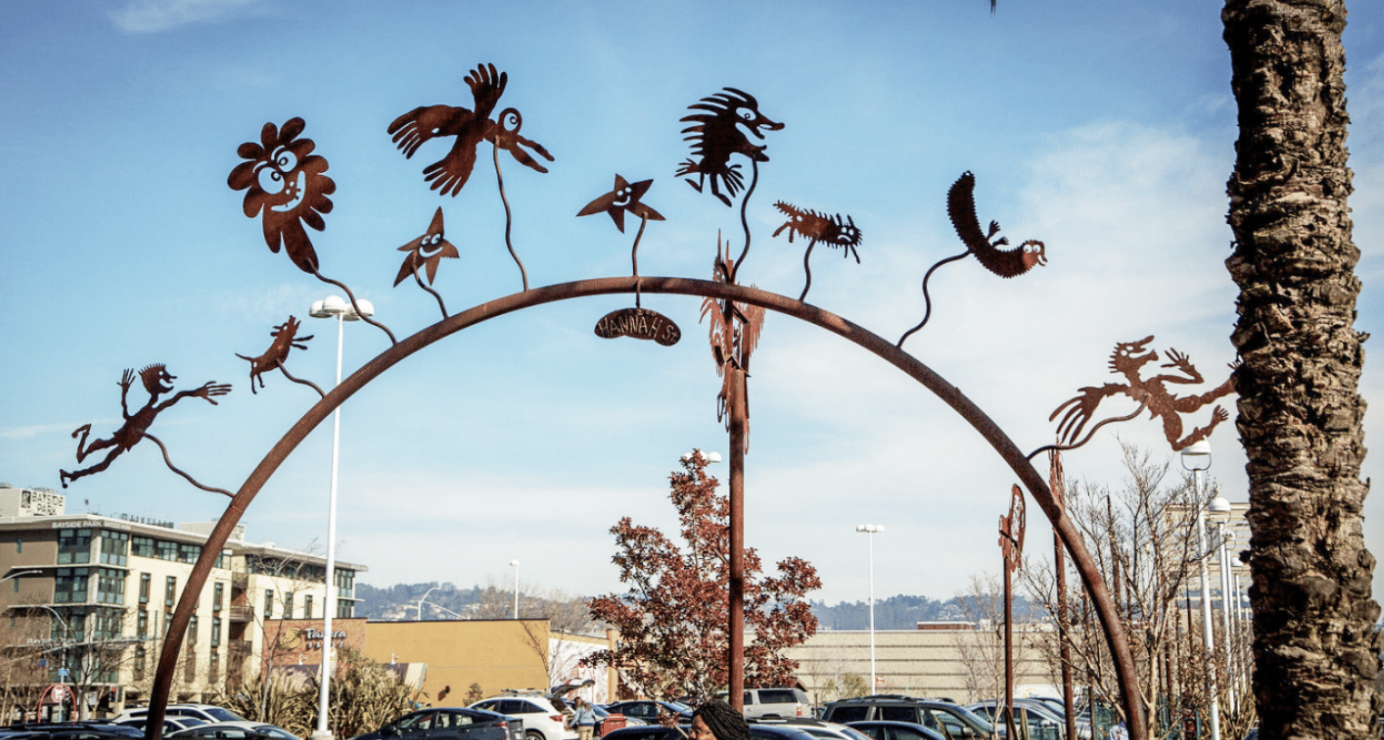
East Bay Bridge Shopping Center, Oakland, CA
It—that is, steel—was a medium he first began to incorporate into his art practice in the mid-1970s. His need for employment took him first to train in industrial welding at the O’Connell Trade School, and later to the Bethlehem Shipyards in San Francisco. During the 12 years he spent mastering welding to build major ocean-going vessels, he also pioneered the use of the oxyacetylene torch to create metal cut-out sculpture. No one else has gained more attention for this technique and medium, and throughout the 1980s he was published in major publications like Smithsonian Magazine. Although others have attempted to emulate him, Bulwinkle’s art is undeniably distinctive. His zany, character-driven work features all sorts of figures that exist in their own crazy worlds. The cartoon-like appearance of these works takes inspiration from diverse sources, including Mad Comics from the 1950s, but it is Bulwinkle’s woodcut prints that serve as the most profound visual source for his sculpture. His forms and figures over the last 50 or so years have maintained a consistent aesthetic that treads a line between humor and lewdness.
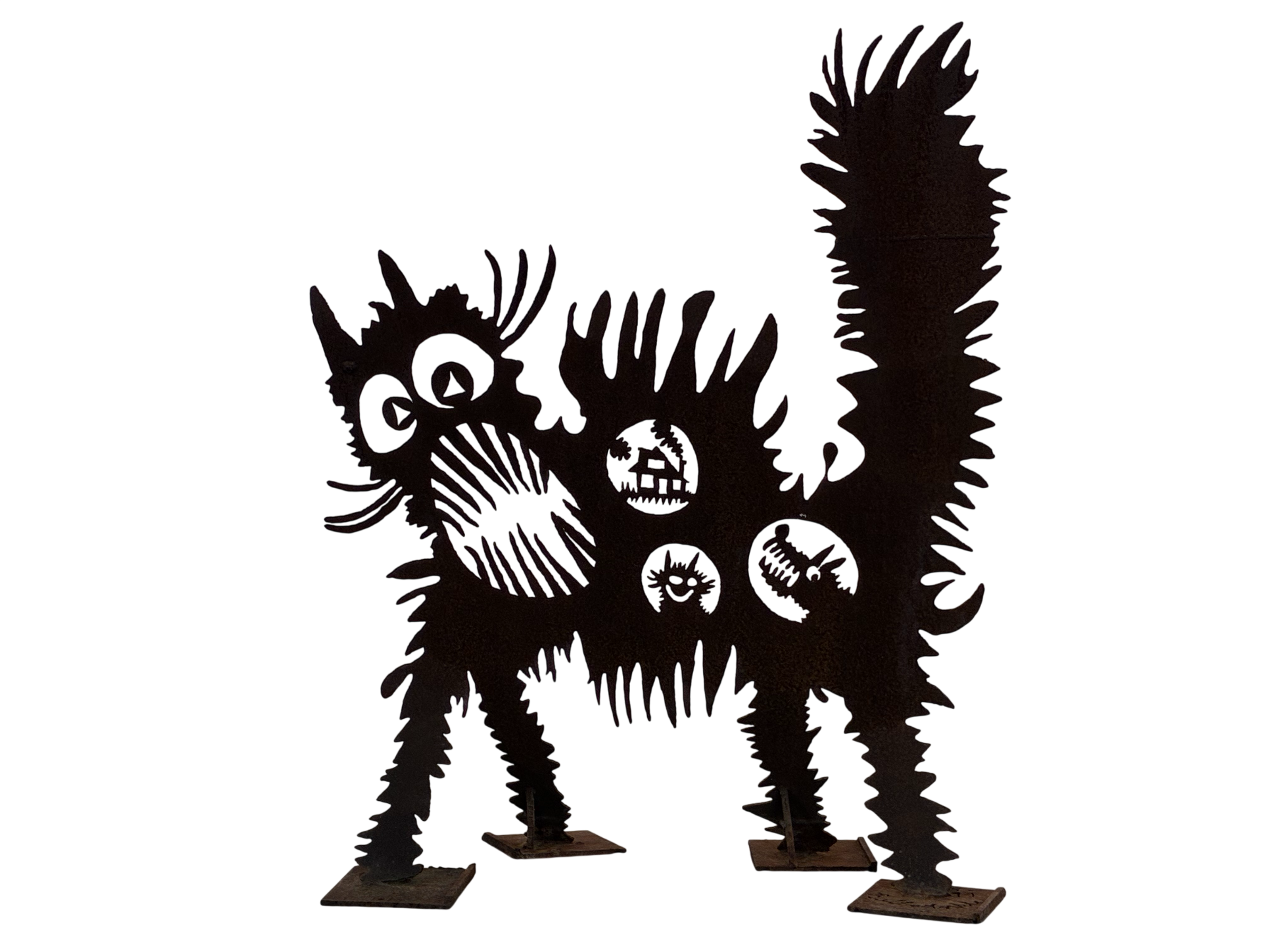
Cat House, 1975 - 1991, Steel, 57 × 47 × 28 in.
It is these prints—often of named people or different animals—by which the other half of Bulwinkle’s fans mostly recognize the artist. These prints, both linoleum cuts and woodcuts, are either in black and white or have some splashes of color, usually red, yellow, or blue. The duo-tone approach has been a constant in Bulwinkle’s work since the 1980s, when the style that would become his hallmark first emerged. Text finds its way in the prints (and invariably the sculptures). The works are laced with frequent use of puns and both casual and indecent profanity, reflecting the significant impact of Funk Art on Bulwinkle’s art.
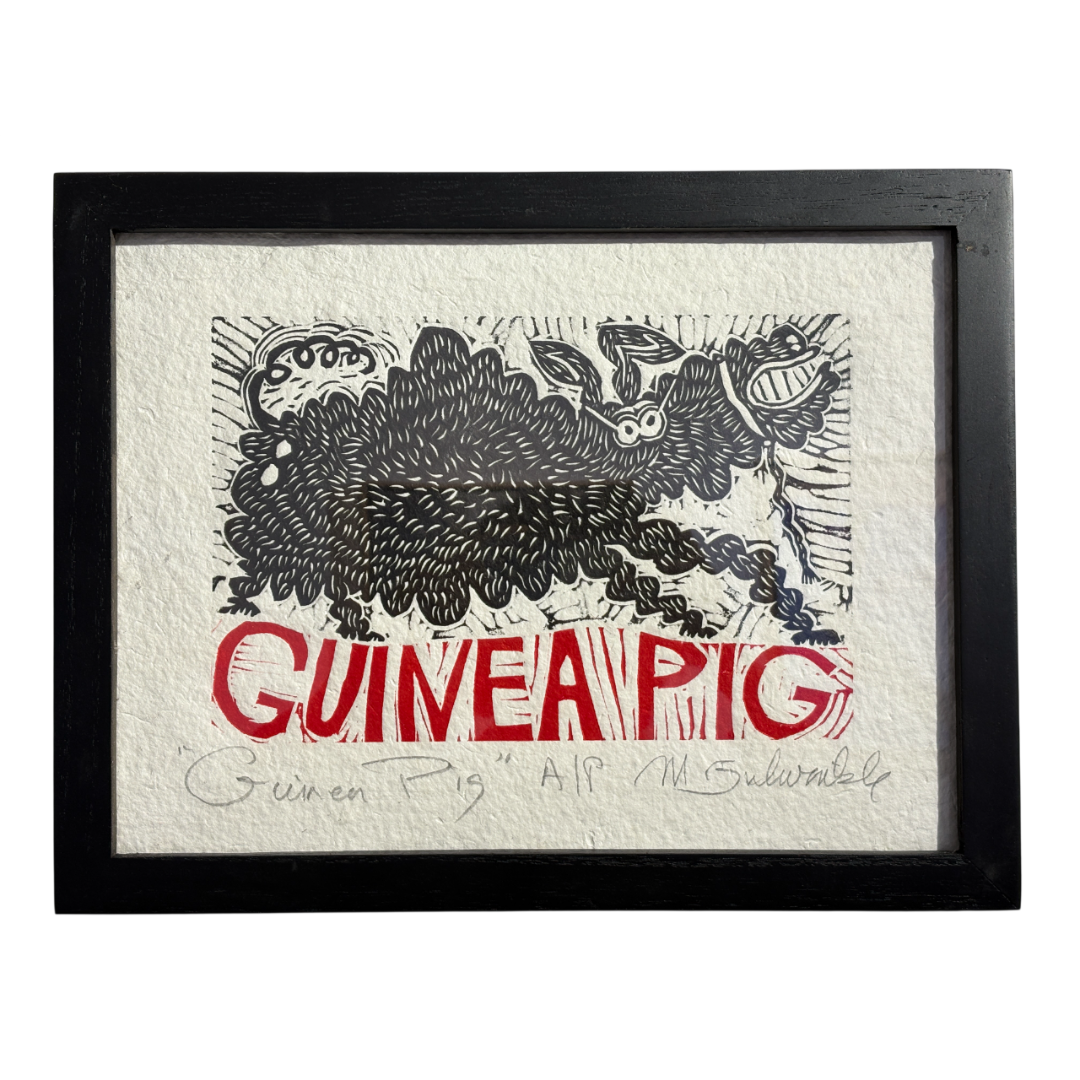
Guinea Pig, woodcut, 8.5 × 11 in
Adopting the practices of the artists who spearheaded that popular movement of the 1960s and 1970s, Bulwinkle utilized writing to further the Funky narrative quality of his works. While he studied at the San Francisco Art Institute (from which he received an MFA), he also began to incorporate increasingly bright (even garish) colors, again adopting the trends seen in the contemporary Funk movement of his peers. His experimentations with enamel serigraph or silkscreen printing in the 1970s are especially notable. While his earliest Hippy-inspired prints from the 1960s are chock-full of color, the muted palette is, essentially, a by-product of his use of fine Japanese paper.
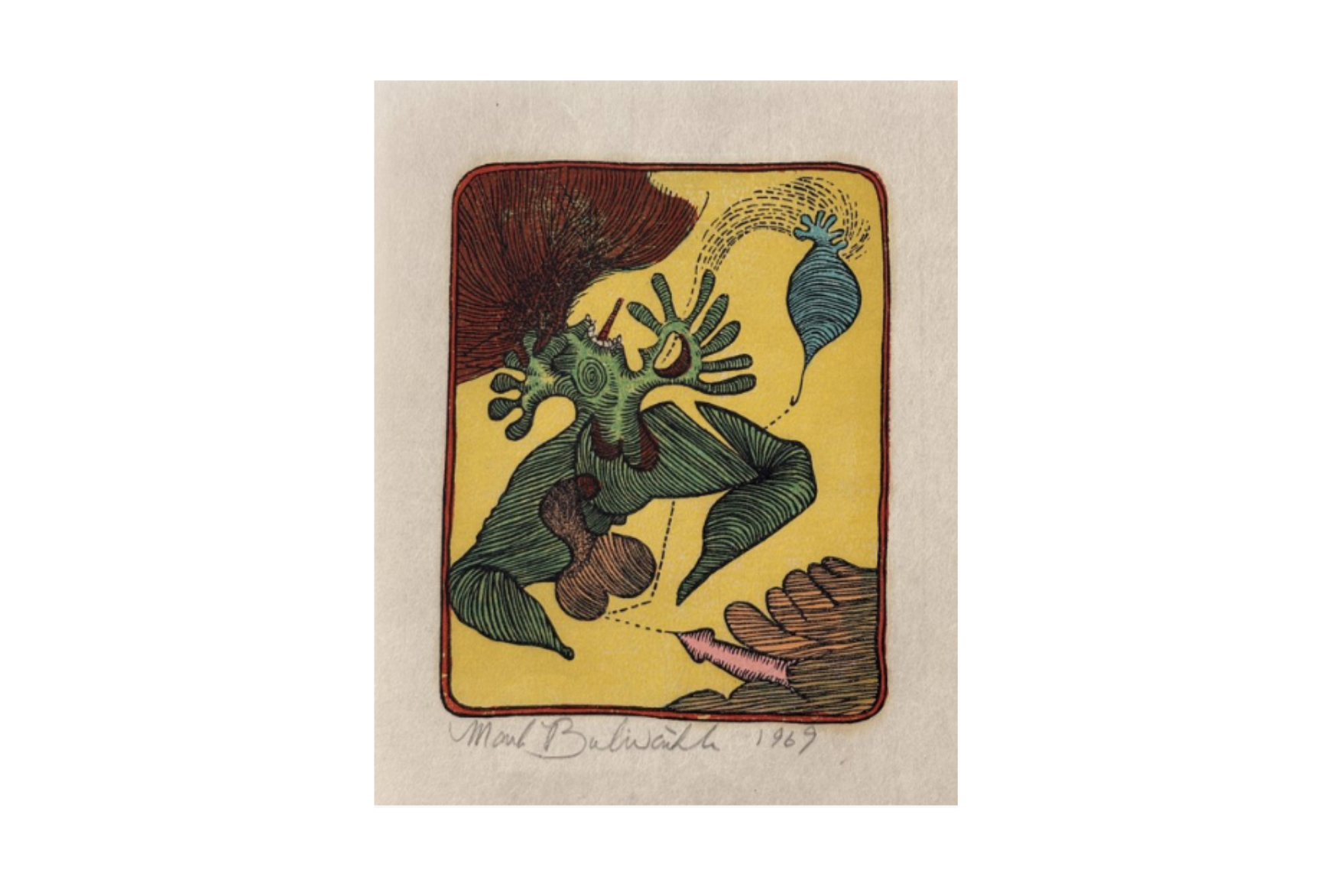
Evolution, 1969, color woodcut, 6.75 × 5.5 in
With his use of enamel paint (the same chemical composition as car paint), the bright colors remain on the surface of the paper. While these images remain some of Bulwinkle’s most renowned, the volatility of his medium prevented him from continuing the use of toxic enamels. As the 1980s rolled around, he firmly entered into a world of black and white. Increasingly complex narratives and compositions ensured a level of visual engagement, even in this colorless world.
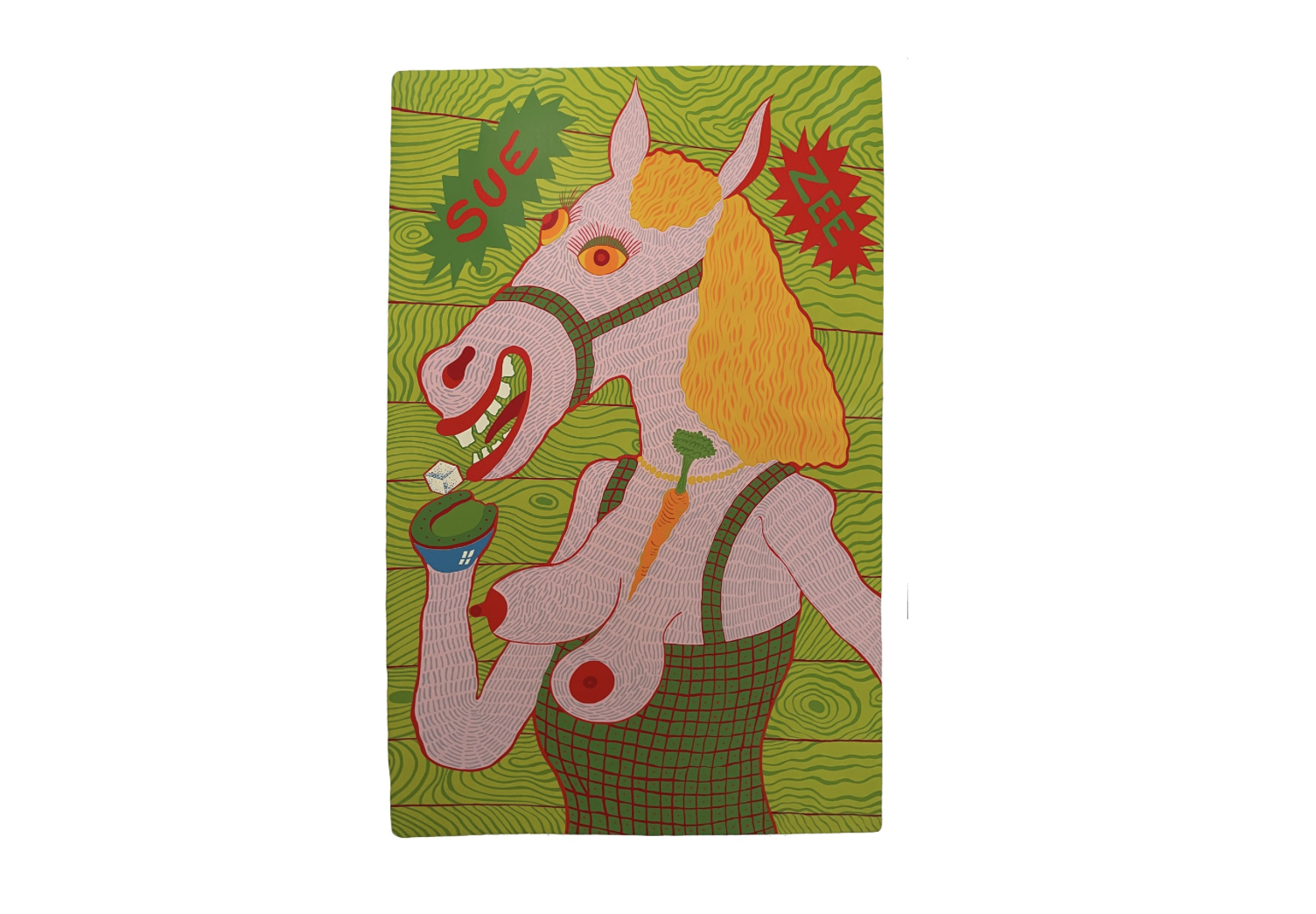
Sue the Horse, 1974, enamel silkscreen, 60 × 40 in
With a prolific output over the last 60 years, Bulwinkle has a lot to offer the wider world. Even today, his innate drive to hunt down scrap metal provides him with a seemingly endless supply of materials. With decades of welding experience under his belt, Bulwinkle maintains a constancy in his sculpture production. Here at the John Natsoulas Gallery, we’re lucky to benefit from his never-ending torch-welding, with our brand-new address sign! The sculptures he produces today maintain the same energy and vitality and feature the many characters that have been his hallmark.
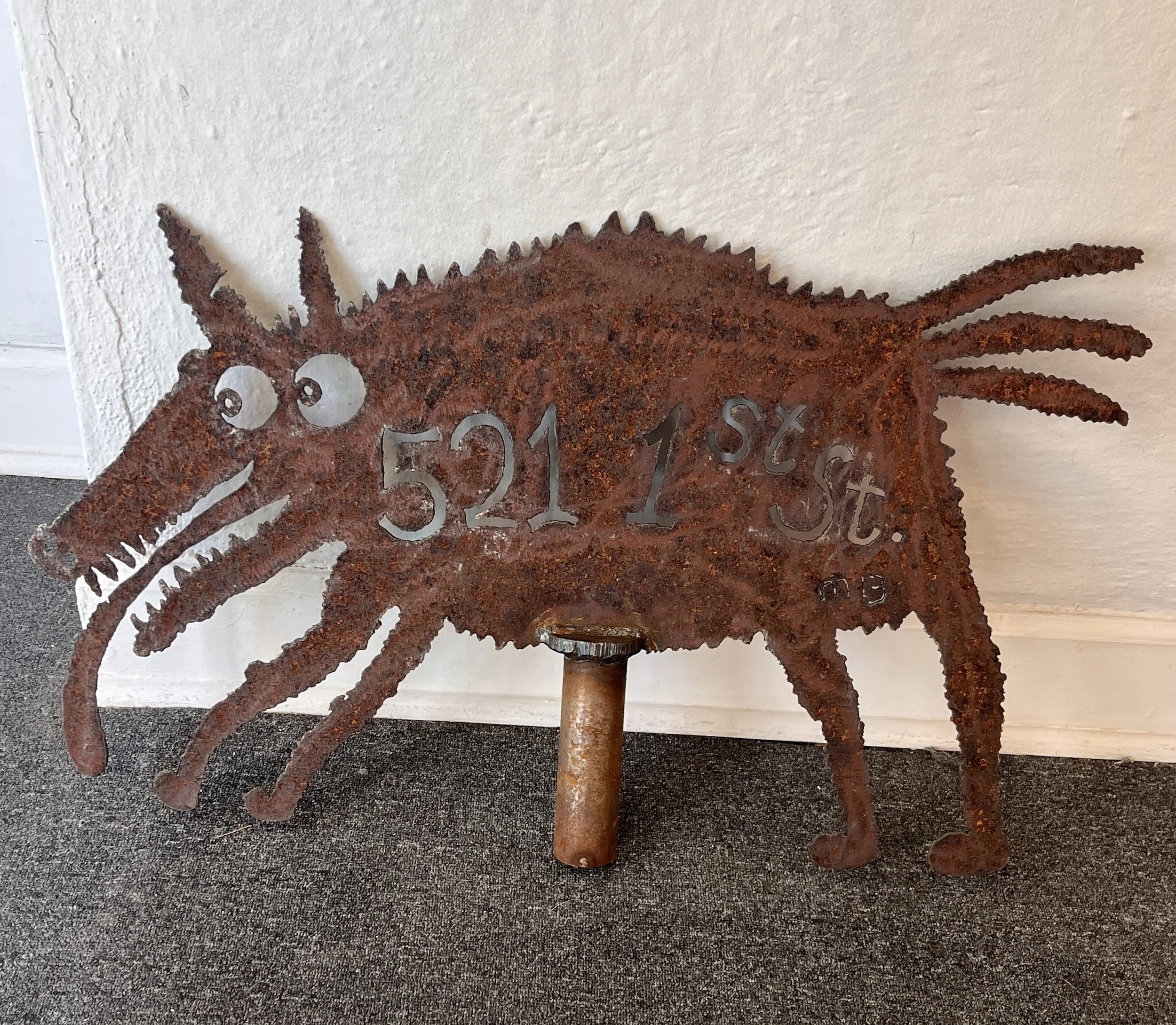
New John Natsoulas Gallery address sign!
Today, Bulwinkle preserves his extensive collection of woodcut blocks. His ability to return to the prints from throughout his career is important. He continues to revisit imagery over and over again, often altering the color compositions of prints as it strikes his fancy. Today, new compositions also emerge onto his woodblocks (and then paper) with effortless ease. Carving his blocks with pure intuition, he does not even rely on preparatory drawings to guide him. His decades of experience allow him to create not just the overall compositions, but even the lettering without any preparation beforehand. He is an artist who lives and breathes his craft, and who has crafted life to fit his need for constant creation.
There is, of course, nothing that has brought Bulwinkle more attention than his eponymous “Bulwinkleland.” His studio and residence in Oakland is not-so-subtly nestled into the residential portion of the city. Yet this Quonset hut, painted bright pink and blue, is a landmark that has brought visitors to the property since Bulwinkle first moved in during the late 1990s. People flock there to admire the metallic flora and fauna representing decades’ worth of work.
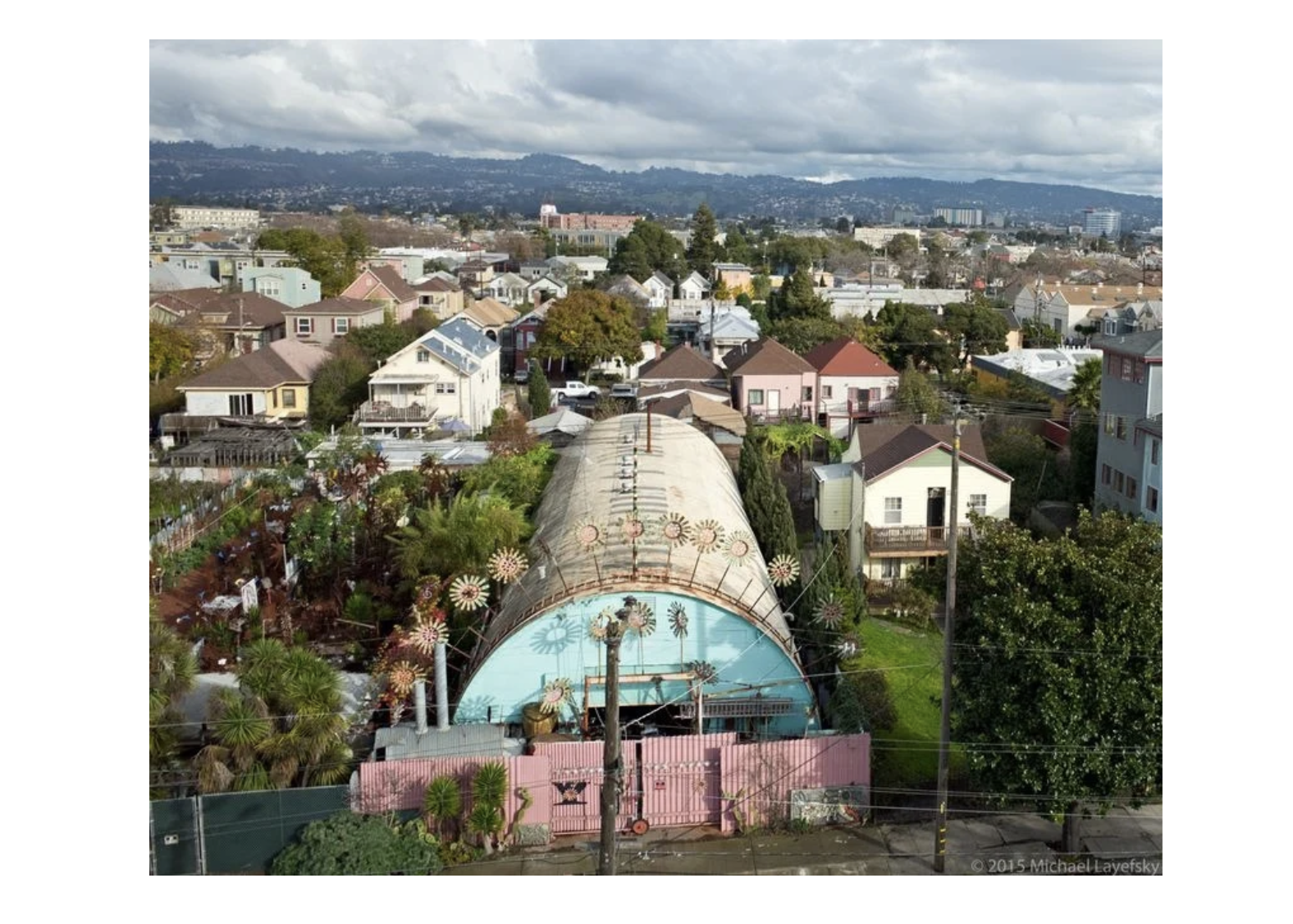
“Bulwinkleland” in Oakland, CA, photograph by Michael Layefsky
And what might be even more incredible than the fact that he has created this impressive environment is that he has done it thrice over. His first foray into residence-based transformation came in the form of his famous “Thrilla on Manila Street” property in Oakland. Over a period of almost 15 years, he transformed his home into a sculpture-filled wonderland. It all came (purposefully) tumbling down in the early 1990s, dismantled simply because Bulwinkle was ready to move. While it took him 6 years of nomadic living in a colorfully painted trailer to settle back down, he finally established himself once again in Oakland, and he has built a studio and home that reflects his creative drive. That space has only grown in status and stature over the last 30 years, gaining him instant recognition for his iconic art and lifestyle. Filled to the brim with sculpture, woodblocks, and prints, the complex gives him the chance to relentlessly pursue artistic creation. Over the last two decades, Bulwinkle has further expanded his footprint by purchasing and transforming a property in Southern California, near Joshua Tree National Park. As a purposeful sculpture, this property is a site-specific installation. It responds to the impressive surrounding landscape, and it incorporates the ever-changing desert sun.
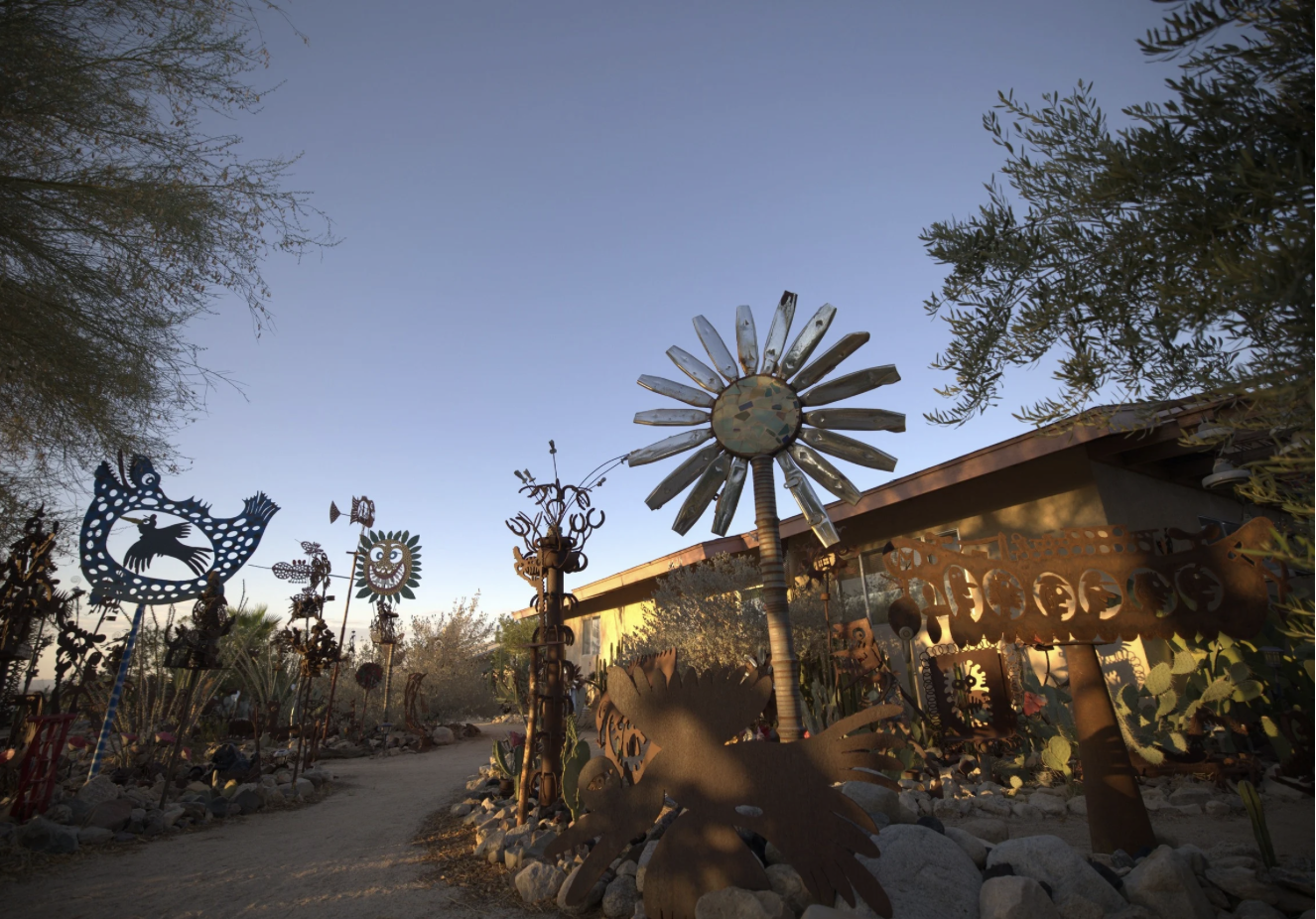
“Bulwinkleland South” near Joshua Tree, CA
Mark Bulwinkle’s career is one defined by constant experimentation, irreverent humor, and an almost compulsive need to create. Whether working with a woodblock, a sheet of steel, a welding torch, ceramic, or an entire landscape, he approaches each material with the same instinctive energy. His work embodies the rebellious spirit of Northern California Funk Art while remaining entirely his own. For more than six decades, Bulwinkle has developed a visual language populated by strange characters, unexpected narratives, puns, profanity, and humor, all rendered through a remarkable command of his materials.
The John Natsoulas Gallery is proud to currently present (from June 24 to August 22, 2026) an exhibition of Mark Bulwinkle’s work, bringing together the prints and sculpture of an artist whose career has continually challenged the boundaries between fine art, craft, humor, and everyday life. For those who know Bulwinkle primarily through his public metal sculptures, the exhibition offers an opportunity to see the woodcuts and prints that have informed his sculptural vocabulary. For those who know him through his prints, the sculptures reveal the extraordinary physicality behind the artist’s imagery. Together, they offer a fuller picture of Mark Bulwinkle: a rebel artist, lifelong maker, and one of the most distinctive voices in Northern California art.